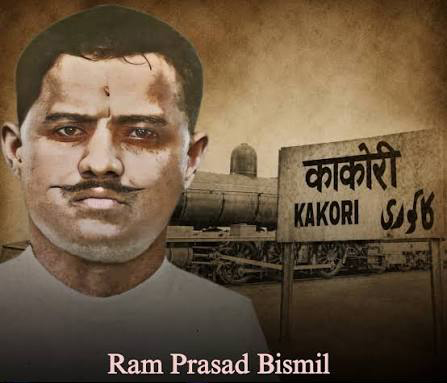
The immediate consequence of Kakori was the destruction of the organisation that had carried it out. Within a year the Hindustan Republican Association had lost most of its first-rank leadership to arrest, and the prosecution reached members who had taken no part in the events on the train at all.
The second consequence was public. The Kakori Conspiracy Case became one of the most closely followed trials of the decade. It ran for eighteen months in a Lucknow courtroom, and the accused used it — as political defendants have always used trials — as a platform.
The third consequence was political, and it cut across party lines. When death sentences were confirmed, senior nationalist figures who disagreed entirely with the revolutionaries' methods petitioned for commutation. Motilal Nehru, Madan Mohan Malaviya, Muhammad Ali Jinnah, Lala Lajpat Rai, Jawaharlal Nehru and Ganesh Shankar Vidyarthi were among those who supported the appeals.
A mercy petition carrying seventy-eight signatures from members of the Central Legislature was rejected by the Viceroy, Lord Irwin, on 9 September 1927. A further appeal to the Privy Council in London failed the same month.
The fourth consequence was the longest-lasting. The younger members who escaped prosecution — Chandrashekhar Azad above all — reconstituted the organisation in 1928 as the Hindustan Socialist Republican Association, with a programme that had moved decisively toward socialism. The line of activity that produced Bhagat Singh and the events of 1929 runs directly out of Kakori.
The fifth was cultural. The executions of December 1927 produced a body of mourning literature, songs and remembrance that carried these men into the popular imagination far more effectively than anything they had done while alive.